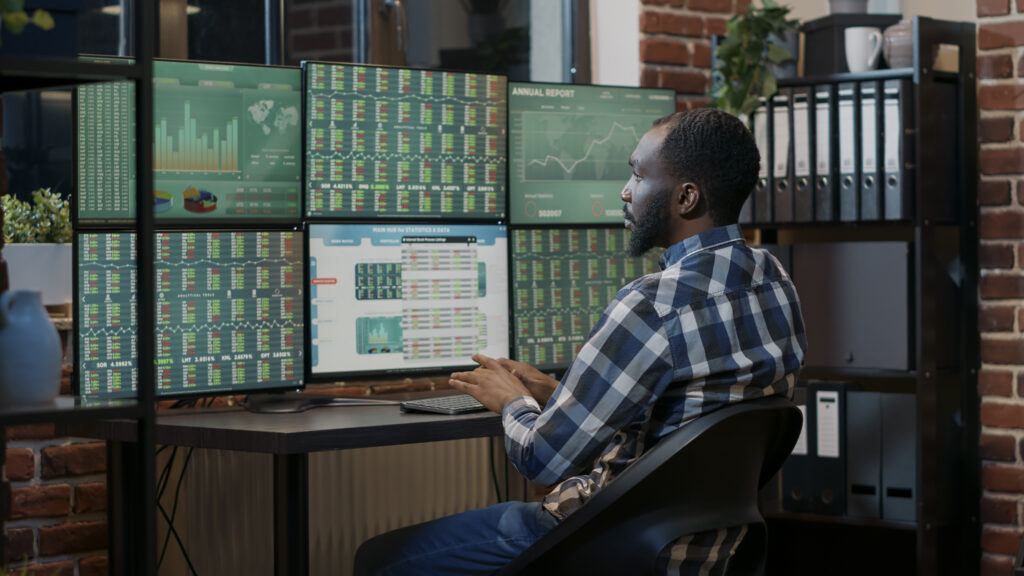
Proprietary trading has become a preferred path for traders who want structured growth, larger capital access, and a disciplined environment. Retail trading often creates emotional pressure because traders use personal savings, face uncertain routines, and struggle with consistency. Proprietary trading helps solve these issues by offering a defined system where traders follow clear rules, use professional resources, and benefit from reduced personal financial exposure. This model encourages responsible behaviour and supports traders who want long-term development.
As global markets expand, funded trading creates opportunities for disciplined individuals who seek clarity and stable processes. Understanding how prop trading works becomes important because funded firms operate with strict risk controls. Traders must work within these limits to earn profits and maintain accounts. Many traders appreciate this structure because it removes randomness and promotes a measured approach to performance. With the right mindset, proprietary environments create meaningful growth for traders at every experience level.
Understanding Proprietary Trading in Today’s Market
Proprietary trading is a straight business deal: a firm puts up its own capital, lets proven traders use it, and splits the profits – usually 70-90% to the trader. In return, the firm demands military-grade risk control because every losing streak comes straight out of its balance sheet. It’s the closest thing retail traders ever get to sitting on a real institutional desk, without the suit or the Ivy League degree.
What actually happens inside modern prop firms:
- You trade the firm’s money across forex, crypto, gold, Nasdaq, Nifty – whatever instruments they green-light.
- Zero personal financial risk on your side; only reputation and time are on the line
- Rules are non-negotiable: typical caps are 4-5% daily loss, 10-12% total drawdown, and strict consistency targets.
- Profit splits start low (50/50 on some cheap challenges) and climb to 90/10 only for proven performers.
The real journey in three stages:
- Evaluation → paid test to separate gamblers from traders (most fail here twice before passing)
- Live funded → same rules, bigger size, real payouts – this is where retail habits die fast
- Scaling → every clean 10-15% profit unlocks double the capital; top traders eventually run $1M–$5M books.
The less-obvious advantages that actually change traders:
- Forced patience: you learn to sit on your hands for days waiting for a genuine edge.
- Immediate accountability: one reckless week and the account (and income) disappears
- Institutional-grade tools and restricted stock lists that block revenge trading and FOMO
- Daily/weekly reviews that expose your psychological leaks faster than years of solo trading ever could
Survive the prop environment for a full year, and you don’t just get bigger payouts – you become a completely different trader: calm, process-driven, and allergic to unnecessary risk. That transformation is the real product the best firms are selling.execution and tight control over risk.

How Prop Trading Actually Works in Live Markets
Proprietary trading firms are not charities or brokers; they are high-stakes risk funds that lend their own capital to proven traders in exchange for a large share of the profits. Everything inside a prop firm is engineered around one core principle: survive first, grow second. The house is constantly watching drawdown velocity, position concentration, pre-market preparation depth, and emotional stability because even one rogue trader can wipe out months of collective profits. Unlike retail brokers who make money when you lose, prop firms only win when you consistently win, but they will cut you the moment your risk profile threatens their balance sheet.
The real day-to-day mechanics inside a funded prop environment:
- Pre-market ritual is mandatory: every funded trader must submit a detailed watchlist with marked supply/demand zones, order-block levels, and session-specific liquidity voids at least 30 minutes before the opening bell.
- Maximum daily loss is non-negotiable (typically 4–5%); breach it once and the account is frozen instantly, no appeals
- Position sizing is algorithmically enforced; you cannot allocate more than 1–2% effective risk per idea regardless of conviction level.
- Trade frequency is capped; many firms limit traders to 3–6 high-probability setups per day to prevent overtrading and revenge cycles.
- News trading is either completely banned or restricted to a pre-approved calendar with reduced leverage 15 minutes before and after red-folder events.
- Weekly performance reviews are brutal and data-driven: Win rate alone means nothing; profit factor, expectancy, maximum favourable/adverse excursion, and recovery factor determine whether you keep the account.
- Scaling is slow and deliberate; most firms demand 8–12 consecutive profitable weeks with drawdown under 6–8% before adding even $25k–50k to your buying power.
The entire system is designed to force you into the 1% of traders who treat the market like a business rather than a casino. Those who adapt to the structure don’t just get funded; they become systematically unemotional about money, which is the real edge in professional trading.
The Hidden Engine: Tools, Community & Continuous Feedback Loops
Top prop firms don’t just hand you capital and wish you luck; they immerse you in an ecosystem deliberately built to accelerate skill acquisition and expose behavioural leaks faster than any retail journey ever could.
What serious prop environments actually provide beyond the payout:
- Real-time risk dashboard that colour-codes your session the moment you approach 50% of the daily loss limit
- Trade replay software that forces you to grade every single entry/exit within 30 minutes of closure (mandatory submission)
- Daily coach debriefs where senior traders tear apart your journal in front of the desk; no sugar-coating, only objective feedback
- Internal leaderboards that rank traders by Sharpe ratio and Calmar ratio, not total P&L, creating a healthy obsession with risk-adjusted returns
- Restricted symbol lists: many desks lock you out of meme stocks, low-float runners, or anything with an average daily volume under 2 million shares
- Psychology sessions with sports/performance psychologists who specialise in choking under pressure and tilt management
- Equity curve analytics that flag “hidden overtrading” even when you’re green, catching slow bleeds before they become blow-ups
Traders who treat these resources as non-optional graduate from hoping to knowing. The combination of enforced discipline, immediate consequences, and institutional-grade feedback compresses five years of painful retail lessons into six to twelve months of structured growth. That is the real (and rarely discussed) reason funded traders who survive the first year tend to stay profitable for life.
Prop Trading Strategies That Support Stability and Growth
Proprietary environments demand strategies that perform reliably without excessive risk. Traders need simple, repeatable setups that work across multiple conditions. The best prop trading strategies focus on structure, liquidity, and confirmation-based execution.
Trend Continuation Strategy
This strategy follows major market direction. Traders wait for clean pullbacks in support or resistance. They enter after confirmation signals. Trend continuation reduces noise and confusion. It works well for funded traders because it encourages structure and patience.
Liquidity Sweep Strategy
Liquidity sweeps occur when markets hunt stop clusters before reversing. Traders wait for the sweep, watch for rejection, and enter with tight stops. This method offers strong accuracy because it aligns with institutional order flow. It also fits funding rules due to its controlled risk profile.
Session Momentum Strategy
Markets behave differently during global sessions. London often produces early volatility. New York creates continuation or reversal moves. Traders who follow session timing avoid unnecessary trades and focus on predictable movement. The strategy supports consistency and reduces emotional trading.
Swing Reversal Strategy
Swing traders use higher timeframes to locate major reversals. They monitor weekly and daily structure, liquidity zones, and trend shifts. This method helps traders avoid noise and focus on clean directional changes. It suits individuals who prefer patience and fewer trades.
Each strategy aligns with the natural rhythm of proprietary trading. The goal is to produce stable performance while respecting firm rules. Strategies that rely on structure rather than prediction perform better in funded conditions.
Benefits of Proprietary Trading Beyond Large Capital Access
The benefits of proprietary trading extend far beyond trading with firm money. The environment transforms traders both technically and psychologically. These improvements shape their long-term careers.
Reduced Personal Financial Stress
Traders do not risk personal savings. This reduces anxiety and helps them focus on execution quality. Without fear of large personal loss, traders think clearly and follow logic.
Professional Tools and Real-Time Data
Proprietary firms provide advanced charting platforms, analytics dashboards, and institutional-level data. These tools improve decision-making. They also help traders understand deeper market mechanics.
Behavioural Structure Through Rules
Funding rules prevent dangerous habits. Traders avoid impulsive trades and focus on confirmed setups. This structure supports responsible behaviour and long-term consistency.
High Profit Split Potential
Many firms offer attractive profit shares. Traders earn significant income while using firm capital. This shift reduces financial barriers and empowers individuals to scale performance.
Accelerated Skill Development
The combination of strict rules, advanced tools, and daily repetition accelerates growth. Traders learn faster in proprietary environments than they do in isolated retail trading.
These advantages show why proprietary trading continues to grow. Traders improve their skills, psychology, and performance under systems designed to support long-term development.

Effective Prop Trading Risk Management
Strong Prop Trading Risk management decides whether traders survive or fail in funded environments. Risk control influences every decision and protects accounts from unnecessary damage. Traders who master this skill remain consistent, calm, and prepared for shifting market conditions.
Precise Position Sizing
Traders size positions with careful calculation. They define risk before entering any trade. They avoid oversized positions that create emotional pressure. Controlled sizing prevents deep drawdowns and supports stable long-term performance.
Defined Stop-Loss Placement
Stop-loss levels follow market structure, not emotion. Traders place stops logically and never widen them during active trades. This discipline protects the account during volatility and reinforces consistent behaviour.
Daily Loss Limits for Stability
Firms enforce strict daily loss limits. Traders must stop trading once they hit those thresholds. This rule prevents emotional spirals and protects both trader and firm capital. It also encourages responsible planning.
Emotional Discipline During Uncertainty
Risk management includes emotional control. Traders handle frustration, uncertainty, and losing streaks with discipline. They follow routines that keep their decision-making grounded. They rely on their plan rather than reacting impulsively.
Understanding Market Cycles
Markets shift between trending, consolidating, and reversing phases. Traders adjust wisely to each cycle. They avoid forcing trades during unclear conditions. They protect capital and wait for a clean structure before committing.
Mastering Prop Trading Risk management helps traders remain funded longer. It allows smoother progression through scaling programmes and builds trust with proprietary firms. This discipline becomes one of the strongest indicators of long-term trading success.
How Prop Trading Works as a Professional Career Path
Many traders treat proprietary trading as a serious career path. A structured framework helps individuals grow, refine discipline, and operate with professional consistency.
Strategy Refinement and Skill Growth
Strong Prop Trading strategies evolve as traders gain experience. Each session offers new insights into structure, liquidity, and market timing. Over time, traders build reliable models suited for multiple market conditions.
Personal and Professional Development
The benefits of proprietary trading extend beyond profit potential. Emotional stability improves. Patience increases. Decision-making becomes clearer. These traits help traders succeed across various financial environments.
Opportunities Beyond Trading Alone
Understanding how prop trading works opens doors to new roles. Some traders mentor others. Some manage teams inside proprietary firms. Others start their own trading divisions. Skills developed in funded environments carry forward into broader financial careers.
Respect for Capital and Long-Term Sustainability
Experienced proprietary traders prioritise capital protection. Sustainable growth matters more than quick gains. This mindset supports consistency, strengthens discipline, and builds long-term financial stability.

Conclusion
Proprietary trading offers structure, discipline, and access to meaningful capital. Traders who understand how prop trading works operate with greater confidence. They use effective prop trading strategies that support stability instead of emotional decisions. They maintain strong prop trading risk management that protects accounts from avoidable losses. The benefits of proprietary trading reach far beyond funding. They shape traders into responsible, stable, and skilled professionals.
Traders who commit to routine, discipline, and consistent practice build lasting success inside proprietary environments. Every decision supports long-term performance and creates the foundation for meaningful career growth.
Read here to learn more about “EMA vs SMA: Which Indicator Is Better for Your Trading Style?