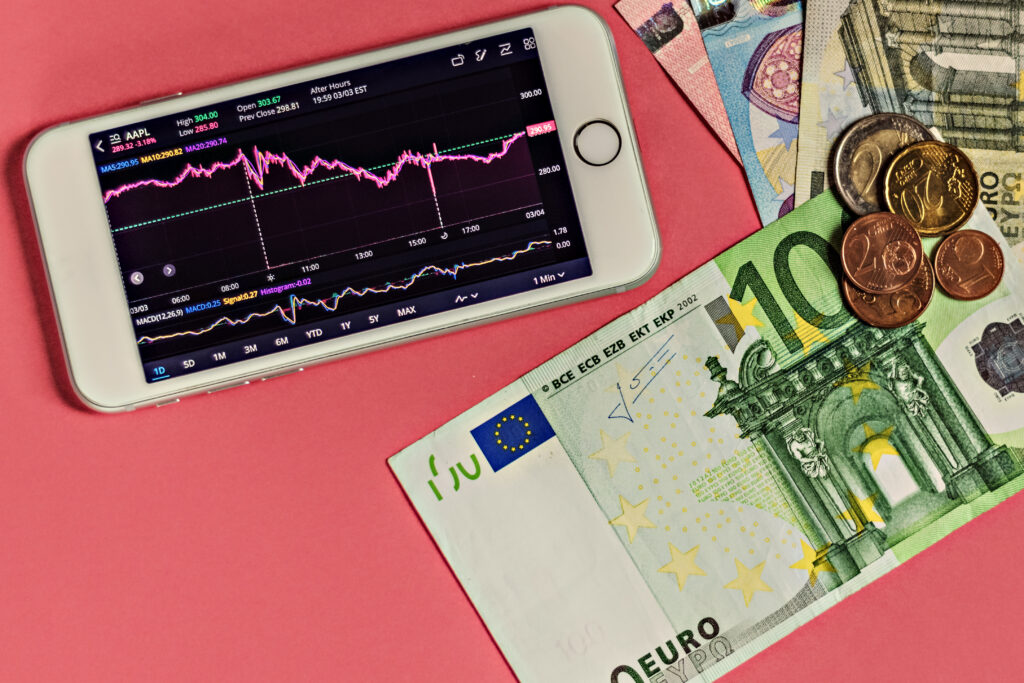
The question ‘Is Forex Trading Profitable?’ remains one of the most debated topics in global finance. In 2026, this question carries even greater weight as the foreign exchange market transforms under shifting economic cycles, technological automation, and changing trader behaviour. Millions of investors enter the forex market every year, drawn by its massive liquidity, accessibility, and the promise of financial freedom. Yet, only a small percentage manage to achieve consistent success.
The Forex Market Outlook 2026 shows that profitability is not a myth—but neither is it a guarantee. For every trader who makes steady returns, there are dozens who lose money due to poor discipline, lack of strategy, or emotional trading. Understanding whether forex trading is genuinely profitable or simply overrated requires a realistic look at what drives performance, how market conditions evolve, and how psychology plays a defining role.
This article explores the truth about Forex trading profitability, the role of risk management, real-world examples, and strategies that actually work in 2026.
The Global Context Behind Forex Profitability in 2026
Forex is not a static market. It constantly reacts to interest rates, geopolitical risks, trade balances, and inflation cycles. The world in 2026 is navigating a post-tightening monetary landscape where central banks are cautiously lowering rates after years of inflationary pressure.
The Forex Market Outlook 2026 reflects a time of divergence—some economies are cooling while others are heating up. The U.S. dollar remains relatively strong, but currencies like the euro, yen, and Indian rupee are showing sharp volatility. This means traders have more short-term opportunities but also greater risk exposure.
For instance:
- The USD/JPY pair has experienced wide fluctuations due to Japan’s bond yield shifts.
- EUR/USD continues to react to European fiscal concerns and inflation data.
- Emerging markets like USD/INR and USD/ZAR offer higher potential returns but with larger drawdowns.
In this environment, whether Forex trading is profitable depends on how effectively a trader can interpret macro changes, manage emotions, and adjust position sizes.

Why Forex Trading Is Still Profitable — For the Disciplined
Forex remains profitable for those who view it as a structured business, not a hobby. Traders who follow clear strategies, use controlled leverage, and respect market cycles consistently outperform emotional participants.
A professional trader never asks if the market is fair; they ask whether their risk model fits current volatility. Consistency comes not from luck, but from habits like maintaining a trade journal, using fixed risk per trade, and backtesting every system.
Key factors that define Forex trading profitability:
- Capital Preservation: Winning traders prioritise not losing money before thinking about profit.
- Position Sizing: Limiting each trade to 1–2% of total capital ensures survival through drawdowns.
- Adaptability: The best traders adapt strategies to macroeconomic shifts instead of repeating old setups.
- Psychology: Controlling fear and greed separates professional traders from impulsive ones.
For example, a trader following a swing strategy during 2025’s dollar surge earned stable monthly returns of 3–4%. When volatility increased in 2026, they reduced exposure by half but maintained profitability by focusing only on high-probability setups.
Why Most Traders Still Lose Money
Despite vast resources, most retail traders fail. The reasons are surprisingly consistent across years.
Common pitfalls include:
- Overleveraging small accounts in hopes of faster growth.
- Ignoring stop-losses or moving them emotionally.
- Relying on social media signals without independent analysis.
- Trading too often without understanding broader economic context.
Studies from multiple brokers in 2026 show that about 78% of retail traders end up losing money. Yet this statistic often hides the reason—traders treat forex like a guessing game rather than a structured discipline.
Even small improvements in discipline—such as logging trades or reducing risk per position—can shift the odds dramatically. Profitability doesn’t come from predicting price perfectly; it comes from managing what happens when you’re wrong.
How Macroeconomic Shifts Shape Forex Trading Profitability
The Forex Market Outlook 2026 reveals a world in transition. Inflation is slowing globally, but rate divergence among central banks is creating volatility across currency pairs. The Federal Reserve’s gradual cuts, the European Central Bank’s cautious stance, and renewed Asian growth cycles all influence forex momentum.
When interest-rate differentials widen, carry trading becomes one of the most profitable Forex trading strategies.Traders borrow in low-yield currencies like the yen and invest in higher-yield currencies like the dollar or peso. Conversely, in low-volatility conditions, range trading strategies outperform aggressive trend systems.
Real-world example:
In early 2026, traders who understood the U.S.–Japan yield gap captured steady profits as USD/JPY rallied. Meanwhile, those overtrading low-volatility pairs like EUR/CHF struggled to find direction.
Successful traders in 2026 think beyond charts. They read macroeconomic conditions, assess bond market trends, and understand how fiscal policy influences capital flows.

Technology’s Role in Forex Trading Profitability
In 2026, technology has transformed how traders operate. AI-driven tools analyse order flow, track institutional sentiment, and automate parts of trade execution. But while technology improves accuracy, it doesn’t guarantee profit.
The traders who benefit most from technology use it to enhance decision-making, not replace it. For instance, AI-based risk models can alert a trader when exposure exceeds defined limits, but discipline still determines whether that alert is respected.
Automation helps with backtesting and execution speed, but judgement and context remain human strengths. A good system plus emotional control still beats a perfect algorithm driven by greed.
The smartest traders use AI for scanning, data collection, and sentiment mapping, but they decide manually. That hybrid approach defines true Forex trading profitability in the digital era.
Understanding Forex Trading Risks and Returns
Every trader must accept that higher returns come with higher risks. The balance between reward and exposure determines long-term survival.
Primary Forex Trading Risks:
- Leverage: The biggest double-edged sword. A 50:1 leverage can magnify gains but also wipe accounts overnight.
- Liquidity Gaps: Low-volume sessions or news spikes can trigger sudden slippage.
- Psychological Pressure: Continuous losses damage focus and decision-making.
- Systemic Risks: Global crises or policy shocks can destabilise even strong strategies.
Typical Forex Trading Returns:
- Conservative traders target 8–15% yearly.
- Skilled swing or position traders aim for 20–30%.
- Highly leveraged strategies may see 40–60%, but risk massive drawdowns.
In essence, forex profitability mirrors a trader’s ability to respect risk, not avoid it. Those who master this balance thrive even in volatile markets.
Regional Profitability Trends Across the Globe
Asia-Pacific: Retail participation in India, Singapore, and Malaysia has surged, with traders focusing on USD/INR and EUR/JPY. AI-enabled apps and low-cost brokers make forex accessible to millions of new investors.
Europe: Despite political uncertainty, liquidity in EUR pairs remains high. Short-term traders find consistent setups in post-policy reactions.
U.S. Markets: The dollar’s resilience provides both trend and countertrend opportunities. Institutional data shows the U.S. still dominates forex volume, ensuring stable spreads.
Middle East and Africa: Commodity-backed currencies like SAR, ZAR, and NGN are benefiting from rising export flows, though volatility remains high.
This global diversity means traders in 2026 can diversify geographically rather than relying on one pair or region—reducing correlation risk and improving Forex trading profitability.
Profitable Forex Trading Strategies That Work in 2026
Every market cycle rewards a specific type of strategy. In 2026, volatility and AI-driven order flow create fertile ground for hybrid approaches.
1. Macro-Driven Trend Strategy
Traders identify fundamental direction through GDP and interest-rate trends. Long-term trades based on central bank divergence deliver strong results.
2. Breakout Strategy
A favourite among intraday traders. Breakouts after consolidation around key zones yield high-probability setups.
3. Range-Bound Reversion
Effective during quieter phases when major pairs oscillate within defined limits.
4. Multi-Timeframe Analysis
Combines trend bias on higher charts with confirmation on lower ones to time precise entries.
5. Carry Trading and Yield Arbitrage
Still among the most profitable Forex trading strategies. As yield gaps expand, traders earn both from price moves and interest differentials.
Psychological Mastery — The Hidden Edge
Every trader eventually realises success has little to do with charts and everything to do with control. The biggest challenge in 2026 isn’t volatility—it’s self-discipline.
Winning traders follow structured routines. They plan before trading, review after trading, and never let emotion dictate decisions. They accept losses as business costs, not personal failures.
Emotional control also means knowing when not to trade. Waiting for ideal conditions is as important as executing the setup itself.
Forex is profitable for the mentally strong. For the impulsive, it remains the fastest way to lose money.
The Institutional vs Retail Divide
Institutions have an advantage—access to liquidity, low spreads, and deep data. But retail traders have one edge: flexibility. They can adapt quickly without layers of approval or oversight.
Retail profitability rises when traders mimic institutional behaviour: using data, journaling, and managing exposure. Consistency beats capital size.
For example, a small retail account growing 15% annually for five years achieves exponential returns while avoiding catastrophic losses. This proves that ‘Is Forex Trading Profitable?’ has a clear answer: yes, when treated like a business, not a hobby.
Real Case Studies from 2026
Case 1:
A London-based trader combined macro indicators with technical confirmation. Using weekly support-resistance and dollar index readings, they earned 22% annually without exceeding 2% risk per trade.
Case 2:
An Indian trader automated part of their system using AI alerts for high-volatility pairs. Despite fewer trades, they maintained consistent 15% yearly growth with minimal drawdown.
Case 3:
A U.S. swing trader focused only on two pairs — EUR/USD and GBP/USD — but used deep fundamental analysis. Their patience led to fewer trades but a 25% profit margin by mid-2026.
These examples prove Forex trading profitability is achievable with structure, patience, and continuous learning.
The Role of Education and Continuous Improvement
Forex education has evolved. In 2026, traders have access to online academies, mentorships, and algorithmic courses. Yet, most still fail to apply lessons because they skip the discipline phase.
The best education doesn’t come from copying signals—it comes from analysing one’s own performance. Backtesting, post-trade reviews, and live journaling refine judgement far better than paid indicators.
A trader’s biggest asset isn’t a system; it’s awareness. That awareness—of behaviour, risk tolerance, and market rhythm—is what keeps profitability sustainable.
When Forex Becomes Overrated
Forex becomes overrated when it’s marketed as effortless wealth. Many influencers show short-term gains while hiding losses. In reality, consistent profitability takes years of refinement.
The hype around “get rich trading forex” often ignores the psychological, financial, and educational cost behind real success.
A disciplined trader sees forex not as a shortcut but as a skill that compounds slowly—like any serious profession.

The Verdict — Is Forex Trading Profitable or Just Overrated?
So, is Forex trading profitable in 2026? The answer depends entirely on the trader. For the educated, patient, and risk-aware, forex remains one of the most lucrative opportunities in finance. For the emotional and unprepared, it remains overrated and unforgiving.
The Forex Market Outlook 2026 confirms that currency volatility, global trade dynamics, and AI-driven execution continue to create room for growth. Profitability, however, belongs to those who approach trading like science, not speculation.
Forex is neither a scam nor a shortcut. It’s a skill. Those who master patience, structure, and risk control will find steady success—while others continue chasing quick wins and calling it luck.
Conclusion
Forex trading in 2026 is not easy, but it’s far from overrated. The market rewards patience, education, and adaptability. Traders who invest in systems, data, and psychology—not shortcuts—can achieve long-term profitability even in uncertain conditions.
Real traders know that success in forex isn’t about one big win. It’s about hundreds of small, consistent decisions executed with precision.
For those who ask, ‘Is Forex Trading Profitable?‘, the answer is yes—if you treat it as a profession, not a promise.
Read here to learn more about “Gold Relevance in 2026: 10 Reasons It May Stay Strong“