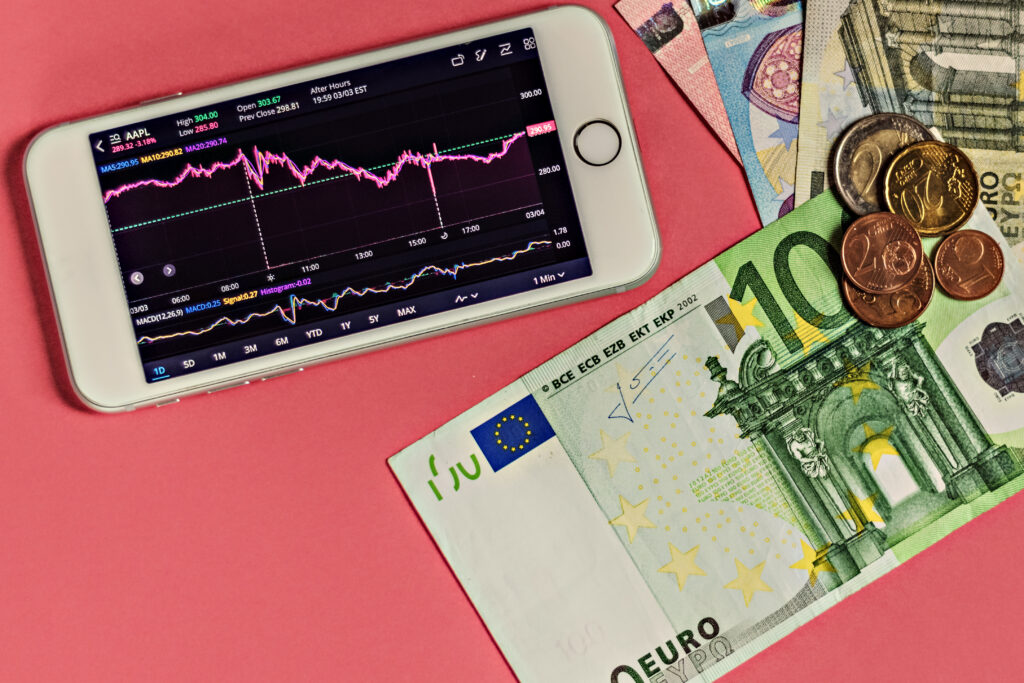
A currency forward might not be the flashiest topic in the forex world, but it’s one of the most practical and powerful tools available for managing risk. As 2026 begins, global markets are navigating through mixed signals — fluctuating interest rates, geopolitical tensions, and changing trade flows — all of which keep exchange rates moving unpredictably.
In this kind of environment, traders, investors, and global businesses can’t afford to rely on guesswork. They need stability. They need to know how much they’ll pay, how much they’ll earn, and what their numbers will look like months from now. That’s where a currency forward steps in — offering a level of certainty that day-to-day market trading simply can’t provide.
Understanding What a Currency Forward Really Means
A currency forward is an agreement between two parties to exchange a certain amount of one currency for another at a fixed rate on a future date. It’s not an exchange-traded instrument. It’s a private contract — customised, flexible, and directly negotiated between the two sides.
Think of it as an agreement to “lock in today’s exchange rate for tomorrow’s transaction.” Instead of waiting for markets to decide the price later, you make the decision now. Businesses that import goods, exporters waiting for payments, or traders managing large international portfolios all use forwards to manage the risk of currency fluctuations.
What makes it even more practical is its tailor-made nature. You can decide the contract size, duration, settlement type, and currency pair. There’s no standardisation, no one-size-fits-all rule. It’s purely built to match your exact financial situation.
In essence, a forward contract doesn’t aim to make you rich overnight. It aims to keep you safe from surprises, a goal every serious trader and investor can appreciate.

How a Forward Contract in Forex Actually Works
The forward contract in Forex operates on a simple but powerful principle: two parties agree today on an exchange rate for a transaction that will happen later.
Let’s break it down clearly:
- Step 1: The Agreement – The parties decide the amount, currency pair, rate, and future settlement date.
- Step 2: Locking the Rate – The rate agreed upon today becomes the “forward rate”.
- Step 3: Settlement – When the contract matures, the currencies are exchanged at that fixed rate, no matter where the market stands.
If the market moves against you, you’re protected. If it moves in your favour, you don’t gain extra — but you’ve achieved certainty. That’s what makes forwards a tool for discipline rather than speculation.
Businesses use them to secure predictable cash flows. Investors use them to protect returns from foreign assets. And forex traders use them to balance their exposure when taking larger positions across multiple currencies.
What Shapes the Forward Exchange Rate?
The foreign exchange forward rate is determined by more than just the spot price. It reflects the interest rate difference between the two currencies involved and the time remaining until settlement.
For example, if the U.S. dollar has higher interest rates than the euro, the dollar tends to trade at a forward premium relative to the euro. If it’s the other way around, the dollar trades at a forward discount.
This relationship, known as interest rate parity, keeps the global currency market efficient. It means that the forward rate is not a prediction of where the currency will go but rather a fair price adjusted for the cost of holding or borrowing each currency over time.
In 2026, with rate differentials widening between developed and emerging economies, forward pricing will continue to be shaped by how central banks handle inflation and growth. Traders who understand this connection between rates and forward prices will find better opportunities to hedge or position themselves intelligently.
Why Hedging with Currency Forwards Matters in 2026
Hedging has always been about protection, not prediction. And in 2026, hedging with currency forwards is more important than ever. The global economy is in a period of adjustment. Some regions are cooling down, others are expanding rapidly, and currency values are swinging as investors move capital across borders.
A forward contract allows a trader or company to plan with confidence, knowing exactly what their future exchange rate will be. That’s a huge advantage for anyone exposed to global markets.
Here’s why many professionals are relying on forwards this year:
- They eliminate uncertainty in future transactions.
- They lock in profit margins for exporters and importers.
- They stabilise portfolio values for investors in foreign assets.
- They cost nothing upfront, unlike options or insurance products.
- They support better financial planning for multinational firms and traders alike.
In a market where even a one per cent currency shift can wipe out an entire quarter’s profit, a forward is often the difference between consistent growth and unexpected loss.

Currency Forward Example for Forex Traders
Let’s take a realistic currency forward example to see how this works.
Imagine a European exporter who will receive $5 million in three months from a U.S. client. The current exchange rate is 1.10 dollars per euro. The exporter worries that the euro might strengthen by the time the payment arrives, which would reduce the euro value of their earnings.
To protect themselves, they enter into a forward contract with their bank to sell $5 million for euros at 1.10 after three months.
Now, two outcomes are possible:
- If the euro strengthens to 1.05, the exporter avoids losing value because they’re still selling at 1.10.
- If the euro weakens to 1.15, they miss out on potential extra profit but enjoy certainty and stability.
That’s the core idea of a forward. It’s about control, not speculation. You give up potential gains to remove risk — a trade-off most professionals are happy to make in unpredictable markets.
When Traders Should Use Currency Forwards
Currency forwards aren’t just for corporations. Smart traders and investors use them strategically too.
You should consider using a forward contract when:
- You have a known future payment or receipt in another currency.
- You want to hedge exposure to foreign investments or profits.
- You need to repay international loans or manage offshore income.
- You prefer predictable outcomes over speculative bets.
- You want to avoid margin requirements that come with futures contracts.
Forwards make sense when stability is more valuable than chasing a few extra points of gain. They allow you to focus on your strategy rather than worrying about daily currency fluctuations.
Risks and Limitations of Currency Forwards
While forwards are among the most reliable hedging tools, they’re not risk-free.
- Counterparty Risk: Since forwards are private contracts, one party might fail to fulfil their obligation.
- Liquidity Risk: It’s often hard to exit or modify a contract before it matures.
- Opportunity Cost: If the market moves favourably, you’re still bound to the agreed rate.
- Mark-to-Market Risk: The contract’s value may fluctuate before settlement, affecting reported profits.
These aren’t reasons to avoid forwards, but they highlight the importance of using them wisely as part of a broader, disciplined strategy rather than a standalone tactic.
How Currency Forwards Differ from Other Hedging Tools
It’s easy to confuse forwards with other forex instruments like futures or options, but the differences are significant.
A forward is private, customisable, and flexible. It’s negotiated directly between two parties. There’s no standard size or expiry date. In contrast, a futures contract is standardised and traded on an exchange, making it more suitable for short-term speculation.
Options are another alternative. They give the right, but not the obligation, to buy or sell a currency at a set rate. However, they require an upfront premium. Forwards don’t. Once agreed upon, they bind both parties equally – simple, direct, and cost-efficient.
This flexibility explains why currency forwards remain a favourite among corporations, institutional investors, and professional traders alike.
Market Outlook for 2026
The currency forward market is poised for another active year in 2026. With inflation moderating but interest rate policies still diverging, volatility will likely remain elevated across major currency pairs.
Many global companies are increasing their use of forwards to hedge cross-border risks, especially those operating in emerging markets. For traders, this means more opportunities to leverage forwards not only for protection but also for strategic positioning aligned with macroeconomic trends.
Fintech innovations are also transforming how forwards are accessed. Today, digital platforms allow even smaller businesses to book and manage forward contracts directly – a development that once seemed reserved for big corporations. This democratisation of hedging tools is reshaping the forex landscape.

Conclusion
A currency forward is not just another financial product. It’s a strategy, one that helps you stay calm and consistent in a market that rarely stands still.
By fixing future exchange rates today, traders and investors can remove guesswork from their financial plans and focus on execution instead of reaction. It doesn’t eliminate all risk, but it gives you something more valuable: control.
In a volatile world where every tick in the market can impact profits, that control is everything.
If 2026 turns out to be another year of currency turbulence, the traders and investors who understand and use forward contracts in forex wisely will be the ones who stay ahead, not by luck, but by preparation.
Read here to learn more about “What Is Water Investments in 2026 and How to Invest“