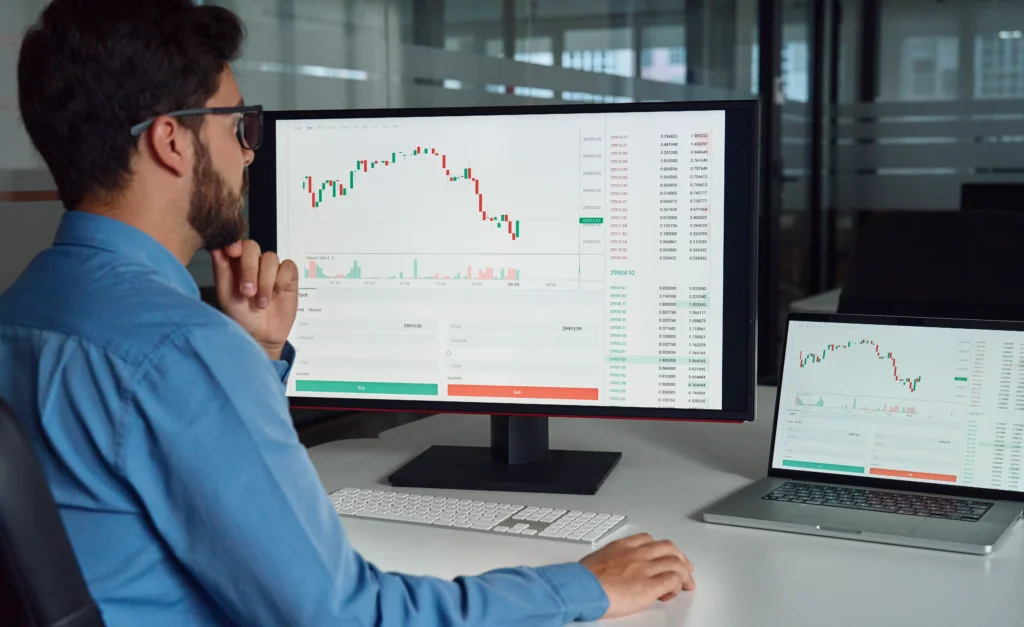
Machine learning in trading has transformed the way markets operate. Traders use models to process data quickly, test ideas faster, and create strategies that work in real time. This technology brings efficiency and speed. However, machine learning in trading also introduces a growing dependence that many traders ignore. Markets now move under the influence of countless automated models. Yet, the risks remain hidden because most traders trust these systems without deep understanding. Many rely on them as if they guarantee success.
This trend creates growing concerns. Algorithmic trading dependence keeps rising across global markets. AI overreliance in finance also appears inside hedge funds, proprietary firms, and retail trading communities. As more traders shift toward automated models, they face new dangers. Quant trading risks become stronger as models fail during unpredictable events. Many traders use black box trading models without understanding how they behave during uncertainty. These issues create silent weaknesses in modern trading that require urgent attention.
Machine learning in trading still offers value. It speeds up research and helps traders avoid emotional mistakes. Yet, excessive dependence creates dangerous blind spots. Markets reward awareness, adaptation, and discipline. Traders who rely entirely on automated models lose these essential skills. Therefore, this article explains where the real risks lie and how to balance technology with human judgement.
Why Machine Learning in Trading Creates Hidden Dependence
Machine learning in trading often gives traders a sense of certainty. They see backtests, large datasets, and predictive signals. This information seems powerful. However, models cannot understand unexpected events. They rely only on historical structure. Therefore, algorithmic trading dependence grows when traders stop questioning model output.
Many traders allow technology to guide every decision. They stop observing price behaviour on their own. This approach increases AI overreliance in finance because traders trust automated outcomes more than their personal reasoning. Yet markets remain dynamic. News events shift volatility instantly. Models trained on past data often fail during new cycles.
Quant trading risks appear when traders treat model output as absolute truth. These models depend on assumptions that do not hold in every environment. Liquidity changes. Market structure shifts. Price correlations break. Black box trading models increase this danger because traders cannot see how signals form.
Machine learning in trading creates these issues because it automates processes that once required careful study. The convenience attracts traders. The precision seems impressive. However, dependence forms quietly because automated tools reduce skill development. Once traders lose decision-making ability, they become vulnerable.

The Psychological Trap Behind Algorithmic Trading Dependence
Algorithmic trading dependence grows through a psychological trap. When traders see early success from automated models, they feel confident. This confidence creates a belief that technology will manage uncertainty. Yet machine learning in trading cannot remove uncertainty. It only structures it.
AI overreliance in finance increases when traders assume the model always knows better. This belief prevents them from making independent evaluations. Quant trading risks rise when traders stop reviewing market context. They trust predictions blindly because they feel the system is smarter.
Black box trading models speed up this trap. Traders cannot see the logic behind decisions. They cannot explain why signals change. They cannot measure weaknesses. This creates a dangerous mental shift. Traders stop learning. They stop adapting. They start depending on something they cannot control.
Machine learning in trading becomes harmful only when dependence replaces discipline. The tool becomes a crutch instead of support. Traders must understand this psychological trap if they want long-term consistency.
How Market Cycles Break Machine Learning in Trading Models
Market cycles change constantly. Machine learning in trading struggles when patterns shift suddenly. Many models assume markets behave with consistency. However, specific events break that logic. Elections, policy shocks, inflation spikes, and liquidity crises create unusual conditions. Algorithmic trading dependence increases failure risk during such times.
AI overreliance in finance becomes obvious during regime changes. Models built during stable cycles fail during volatility expansions. The data patterns shift too quickly. Traders who depend on these systems face losses. Quant trading risks increase when models cannot adapt to macro changes.
Black box trading models perform even worse during unpredictable periods. They may generate signals without context. They cannot recognise crowd behaviour. They cannot adjust position sizing during uncertainty. Traders must step in to manage risk manually.
Machine learning in trading requires continuous recalibration. Without this, models drift away from real market dynamics. Traders who ignore this face structural failures.
Real Examples of Machine Learning Failure in Trading
Several real-world failures highlight the risks of dependence.
• Models predicted calm markets before the 2020 global crisis, yet volatility exploded.
• Trend-based systems collapsed when central banks changed liquidity conditions.
• Currency models failed during sudden rate surprises because correlations broke
• Equity prediction systems underperformed when retail flows distorted price action.
• Commodity models misread supply shocks due to incomplete fundamental inputs
These failures show how algorithmic trading dependence can magnify losses. AI overreliance in finance makes traders believe that historical data will explain every outcome. Yet markets react to events that models cannot forecast.
Quant trading risks rise when traders deploy systems without considering scenario changes. Black box trading models often fail in these moments because they lack transparency. Traders cannot adjust the logic quickly. Machine learning in trading requires oversight, adaptation, and understanding, especially during major disruptions.

Why Black Box Trading Models Increase Vulnerability
Black box trading models are popular because they appear advanced. However, they hide logic. Traders cannot see why a signal appears or disappears. This secrecy increases dependence. The trader trusts output without questioning structure.
Machine learning in trading becomes dangerous when hidden mechanisms guide important decisions. Algorithmic trading dependence grows because traders believe complexity equals accuracy. Yet complexity does not guarantee resilience. AI overreliance in finance becomes severe when traders cannot intervene quickly during losses.
Quant trading risks increase because these models fail silently. They produce signals even when market behaviour changes. Traders may react too late. They may face large drawdowns. Black box trading models remove clarity, and clarity is essential for risk control.
Therefore, traders must understand that transparency matters more than sophistication.
How Over-Reliance Weakens Trader Skills
Machine learning in trading removes manual tasks. This helps efficiency. However, it also weakens essential skills. Traders stop analysing patterns independently. They forget how to read structure. They lose awareness of price action rhythm.
Algorithmic trading dependence reduces learning speed. Traders stop reviewing charts with curiosity. AI overreliance in finance also creates false confidence. Traders stop improving risk management. Quant trading risks increase when traders ignore performance reviews. They stop updating assumptions. They stop adjusting strategies.
Black box trading models make the issue worse. Traders stop thinking about market context. They stop asking why volatility changes. They stop understanding how liquidity behaves. Eventually, they become operators rather than analysts.
Machine learning in trading should support traders, not replace them. Skill erosion becomes a silent threat when dependence grows unchecked.
The Structural Risks Most Traders Overlook
Several structural issues increase failures in automated systems. Traders must understand these factors.
• Data quality errors create misleading signals.
• Models overfit historical cycles
• Sudden news shifts model behaviour instantly
• Liquidity changes alter price reactions.
• Extreme volatility creates unpredictable spikes
• Cross-market correlations break without warning
• System latency disrupts execution
• Risk parameters become outdated during new cycles
Machine learning in trading cannot solve these problems alone. Algorithmic trading dependence increases harm when traders ignore these structural weaknesses. AI overreliance in finance becomes dangerous when traders assume these conditions remain stable.
Quant trading risks appear because markets behave in nonlinear ways. Black box trading models struggle under such complexity. Traders must handle oversight manually.
Balancing Machine Learning in Trading with Human Decision-Making
A healthy balance prevents over-dependence. Traders should allow machine learning in trading to support analysis but not replace judgement. They must create clear rules. These rules help them maintain control.
Traders can keep independence through these practices:
• Review signals manually before entry
• Validate model assumptions regularly
• Track performance during cycle changes
• Study market structure daily
• Adjust risk based on volatility shifts
• Monitor liquidity changes
• Evaluate model output with human logic
• Build strategies that combine discretion and automation
Algorithmic trading dependence becomes less harmful when traders maintain awareness. AI overreliance in finance decreases when traders stay active in decision-making. Quant trading risks remain manageable when traders use context. Black box trading models create fewer issues when traders add manual controls.
Machine learning in trading becomes a powerful tool when used responsibly.
Future Outlook: More Models, More Risk, More Responsibility
Machine learning in trading will keep growing. More traders will adopt automated strategies. Markets will rely on large-scale models. Algorithmic trading dependence will rise because firms want speed and accuracy. AI overreliance in finance may intensify as institutions adopt automated decision tools.
Quant trading risks will increase because models will compete in similar environments. Many systems may react together. This synchronised behaviour can cause sharp market swings. Black box trading models will also expand because firms see them as competitive assets.
However, long-term success requires responsibility. Traders must understand the strengths and weaknesses of these systems. They must combine technology with disciplined thinking. They must recognise that models cannot replace judgement.
Machine learning in trading still holds promise. It can improve performance when applied with awareness. The goal should be empowerment, not dependence.

Conclusion
Machine learning in trading has brought innovation, speed, and efficiency. However, it also creates hidden risks when dependence grows unchecked. Algorithmic trading dependence appears in traders who trust models more than themselves. AI overreliance in finance also becomes dangerous when traders lose awareness of changing conditions. Quant trading risks rise when models fail during unusual events. Black box trading models increase vulnerability because they remove transparency.
Traders must build a healthier relationship with technology. They must keep skills sharp, review market structure, and maintain human judgement. When used responsibly, machine learning in trading becomes a powerful advantage. When used blindly, it becomes a silent threat.
This warning aims to highlight the importance of balance. Technology supports success, but awareness protects it.
Read here to learn more about “Impact of Daily Routine on FX Accuracy for Better Trade Selection“