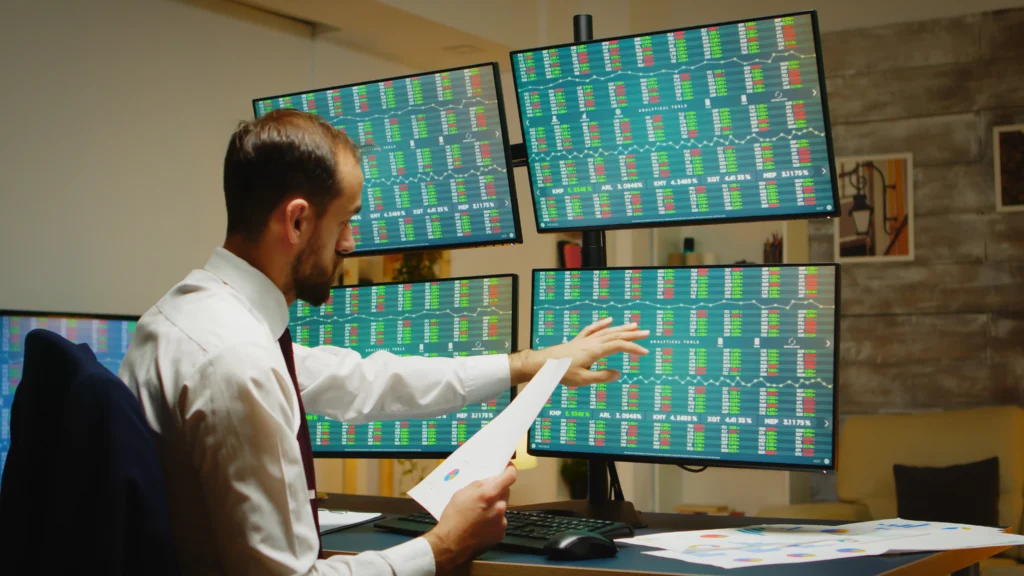
Adapting to the New Phase of the Digital Asset Market
Chaos has turned into calculation in the crypto world of 2026. What was once a volatile playground for dreamers and risk-takers has matured into a structured arena where data, liquidity, and timing define success. Institutional players now shape the tempo, algorithms refine execution, and global regulations add a sense of order to what was once pure uncertainty.
Every move across digital assets now carries meaning. Prices react to liquidity cycles, central bank narratives, and on-chain behaviour more than tweets or trends. Traders who once relied on emotion now turn to precision, and this is where crypto trading strategies have become the real differentiator.
In 2026, trading is not just about catching waves; it’s about knowing when to ride them, when to step aside, and when to reverse course. Successful traders think like analysts and act like strategists. They read patterns, understand behavioural flow, and adapt their tactics to each market phase.
The following seven crypto trading strategies reflect this evolution. They are built for the modern trader – one who values consistency over chaos, preparation over prediction, and structure over speculation. From trend-following systems to on-chain sentiment models, these approaches show how smart strategy, emotional balance, and data awareness can turn crypto’s constant motion into meaningful opportunity.
You can read here to learn more about “Crypto Liquidity Flow Strategy for Steady Trading Results“
1. Trend-Following with Adaptive Timeframes
Trend-following remains a timeless trading framework, yet in crypto it demands flexibility. Digital assets often move in bursts rather than steady waves, requiring traders to adapt their time horizons to volatility conditions.
Key principles that define effective trend systems in 2026 include:
- Multi-timeframe confirmation: Align daily and weekly charts for overall bias, then enter on shorter timeframes when retracements form clean structures.
- Dynamic volatility tracking: Use indicators such as ATR to widen or tighten stops automatically depending on market energy.
- Volume validation: Strong volume expansion during breakouts confirms participation by institutions rather than retail noise.
- Macro awareness: Liquidity events, ETF inflows, or monetary policy shifts often decide whether a trend extends or fades.
Professional traders today treat trends as liquidity phenomena, not just technical signals. As long as capital keeps entering an asset, trend continuation remains more probable than reversal.

2. Range Trading in Consolidation Phases
After impulsive rallies, most cryptocurrencies settle into horizontal ranges. These pauses are not wasted time; they represent markets absorbing prior moves. Successful range trading transforms stagnation into opportunity.
Modern range systems in 2026 emphasise:
- Precision mapping: Mark major horizontal levels using weekly closes instead of intraday spikes.
- Patience over prediction: Wait for the price to test boundaries several times before acting.
- Sentiment cooling: Monitor social and funding data; ranges often coincide with falling retail enthusiasm.
- Liquidity recognition: Observe where buy and sell orders cluster. Institutional liquidity typically builds around obvious retail zones before reversals occur.
Traders who specialise in these quiet phases profit from mean oscillations while others wait for breakouts that may never come. The discipline to respect boredom remains one of the strongest edges in a maturing crypto market.
3. Breakout and Momentum Scalping
Breakout strategies capitalise on volatility expansions after compression. In crypto, such moments are frequent because liquidity fragments across exchanges, and large orders often trigger chain reactions.
Core elements of effective breakout systems include:
- Identifying volatility squeeze: When Bollinger Bands tighten or historical volatility drops to multi-week lows, expansion is near.
- Watching real volume: A breakout supported by heavy volume suggests genuine conviction.
- Timing precision: Entry should follow a confirmed close beyond key structure, not a random wick.
- Scaling profits: Use predefined exit zones or trailing logic instead of emotional reactions.
Momentum scalping works best in active sessions when liquidity is thick. Many short-term traders integrate news calendars and on-chain flow monitors to anticipate breakout triggers such as ETF announcements or large wallet transfers.
4. Mean Reversion with Quantitative Logic
The increasing maturity of crypto markets has introduced statistical patterns similar to traditional finance. Mean reversion aims to profit when price stretches too far from equilibrium and then snaps back.
A balanced quantitative setup focuses on:
- Defining the mean: Bollinger Bands or moving average envelopes help quantify where normal value lies.
- Using standard deviation: Z-score measures highlight when price is statistically extreme.
- Integrating volatility filters: Mean trades work best during calm volatility regimes rather than trending periods.
- Adding structural context: Overextended wicks into liquidity pools often mark reversal areas.
Quantitative mean-reversion models are especially effective in high-liquidity pairs such as BTC/USDT and ETH/USDT. Short-term rebalancing between exchanges also reinforces these pullbacks, allowing consistent but modest returns when managed with tight risk limits.

5. On-Chain Activity and Sentiment Strategy
One of crypto’s greatest advantages over traditional assets is transparent on-chain data. Every transfer, accumulation, or liquidation is visible. Turning this data into tradeable insight separates speculative guessing from informed positioning.
In 2026, traders focus on four dominant on-chain dimensions:
- Whale behaviour: Tracking wallets holding large token quantities reveals accumulation or distribution waves.
- Exchange flows: Rising inflows typically precede selling pressure, while heavy outflows imply long-term holding.
- Network growth: Consistent increases in active addresses often correlate with sustainable bullish trends.
- Profit and loss realisation: Sharp spikes in realised losses can signal capitulation zones, historically favourable for contrarian entries.
This analytical approach converts blockchain transparency into a real-time sentiment gauge. When technical charts and on-chain behaviour align, the probability of success rises dramatically.
6. Algorithmic and Quantitative Execution
Automation now defines how the majority of professional crypto trades occur. With hundreds of exchanges and millisecond price shifts, algorithmic execution ensures precision that human reaction cannot match.
Key structural practices include:
- Rule-based systems: Pre-programmed conditions govern entries and exits, eliminating emotional bias.
- Execution algorithms: VWAP and TWAP models break large orders into smaller pieces to minimise slippage.
- Cross-exchange arbitrage: Algorithms constantly scan price differences between spot and derivative venues.
- Adaptive intelligence: Machine-learning models adjust parameters automatically as volatility and liquidity evolve.
The rise of open-source trading frameworks in 2026 has made algorithmic execution accessible even for independent traders. However, success depends on continuous monitoring and fine-tuning, as market microstructure changes quickly in the crypto space.
7. Macro-Driven Portfolio Rotation
The connection between crypto and global macroeconomic cycles has strengthened considerably. Traders who integrate macro awareness into their decision-making gain a significant edge.
A macro-rotation framework involves:
- Tracking global liquidity: Monitor central bank balance sheets, money supply growth, and real interest rates. Expanding liquidity often drives risk assets higher.
- Watching correlations: Bitcoin’s correlation with technology equities or gold reveals whether it behaves as a risk asset or safe haven.
- Sector rotation: Capital tends to move cyclically between narratives such as DeFi, AI tokens, or Layer-2 ecosystems.
- Hedging exposure: Options and futures allow traders to remain invested while protecting portfolios during uncertain policy phases.
In 2026, most institutional analysts anticipate a moderate easing cycle that could revive risk appetite. Traders who position early within a diversified rotation—balancing stablecoins, blue-chip crypto, and yield assets—may capture both growth and stability.
The 2026 Market Reality
Across all seven frameworks, a few themes remain constant:
- Data integration is everything. Successful traders merge technical, on-chain, and macro information instead of relying on one system.
- Liquidity rules performance. The quality of order execution often matters more than entry location.
- Discipline outweighs prediction. Mechanical adherence to a tested system consistently outperforms emotional decision-making.
- Adaptability drives survival. Strategies that worked in 2023 or 2024 require recalibration as institutional dominance increases.
The modern crypto trader operates less like a gambler and more like a portfolio manager, managing probabilities through structure, not luck.

Conclusion: Trading Smarter in 2026
The digital asset market in 2026 rewards strategic clarity. Each of these seven approaches trend-following, range trading, breakout scalping, mean reversion, on-chain analysis, algorithmic execution, and macro rotation offers a distinct lens to interpret price movement.
No single method guarantees results, yet combining them with proper risk control creates resilience. The future of crypto trading belongs to those who view volatility as information rather than chaos and treat every trade as a data-driven decision, not a bet.
In this era of transparency and automation, the edge no longer lies in faster access but in smarter synthesis. Traders who evolve with the data will remain consistently ahead in 2026 and beyond.
Read here to learn more about AI and Market Volatility: What Every Trader Should Expect in 2026